












Virginia’s Historic Rehabilitation Tax Credit Program Under Review

The Virginia General Assembly’s Joint Subcommittee to Evaluate Tax Preferences met recently to review reforms of various tax credits offered by the state, one of which is the Historic Rehabilitation Tax Credit (HRTC). Kathy Frazier, along with representatives from the Virginia chapter of the American Institute of Architects, Preservation Virginia, and the Associated General Contractors of Virginia, addressed the Subcommittee to reinforce the valuable role the HRTC program has played in revitalization of historic buildings and communities across the state.  Statewide, city planners, developers and downtown representatives are chiming in to add their support for retaining the tax credits.  Articles can be found at:

http://www.richmond.com/business/local/article_6189b9e2-6612-5e95-893f-3aeeb11c3a92.html
http://www.roanoke.com/news/politics/roanoke-leaders-historic-tax-credits-under-scrutiny-benefit-city/article_b98eaa7e-ccbe-5e82-bcb1-3b73491242c2.html

http://www.nbc29.com/story/32867532/virginia-lawmakers-meet-to-discuss-historic-tax-credits#.V8bTj0Lssi8.facebook

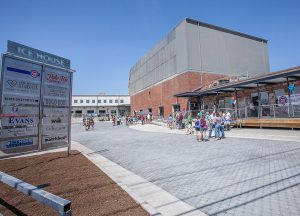
Using historic rehabilitation tax credits, the former Casco Ice House in downtown Harrisonburg, VA was rehabbed to house apartments, office space, retail, restaurants and a brewery.

Using historic rehabilitation tax credits, the former Casco Ice House in downtown Harrisonburg, VA was rehabbed to house apartments, office space, retail, restaurants and a brewery.

Created in 1996, Virginia’s Historic Rehabilitation Tax Credit program is one of the most effective incentives for preservation and revitalization of the state’s vast stock of historic structures. According to a study by Virginia Commonwealth University in 2013, over $3.9 billion has been invested through the Historic Rehabilitation Tax Credit program since 1996 resulting in the rehab of over 2,375 historic buildings throughout Virginia. The projects stimulated the economy in general, creating an estimated 31,000 jobs and generating $133 million in local and state tax revenue. State tax credits amount to 25 percent of total rehabilitation costs. When combined with the 20 percent Federal tax credit, this incentive makes many projects more financially feasible for property owners throughout Virginia. https://preservationvirginia.org/press-room/release/vcu-study-finds-historic-preservation-contributes-to-virginias-economy-by-u

Frazier Associates has been assisting property owners with design and application for historic tax credit projects since the program’s inception.  The firm has witnessed the benefits of this valuable tool for historic preservation of both commercial and residential properties in communities large and small across the Commonwealth. Staunton and Harrisonburg have particularly benefited with visionary developers investing millions in downtown buildings. Examples of some of these projects can be found on our website at https://frazierassociates.com/services/architecture/historic-rehabilitation-historic-tax-credits/

Learn More about the Tax Credits

Kathy Frazier recently presented a webinar to the Virginia Main Street community, “Credits Where Credits Are Due: Bringing Historic Tax Credits to Main Street” which explained how use of the tax credits can not only enhance the appearance of Main Street but can encourage further economic development in Virginia’s downtowns.  Key points of the presentation included:2016 Tax Credit Webinar 1
  • How credits can be used to attract and incentivize downtown investment
  • How to navigate the state and federal historic tax credit process
  • A breakdown of the design guidelines of the Secretary of the Interior’s Standards for Rehabilitation
  • Highlights of successful downtown tax credit projects in Virginia Main Street communities.

To see the webinar, click here:  2016 Tax Credit Webinar

Support Virginia’s Historic Rehabilitation Tax Credits!

The AIA Virginia is a strong supporter of Virginia’s Historic Rehabilitation Tax Credit, noting “not only does the HRTC have a proven track record for stimulating economic growth through private investment, it helps to preserve Virginia’s cultural heritage for future generations”. The AIA, along with a coalition of twelve other organizations, are working to educate legislators on the benefits of the program in an effort to keep the credits in place. To find out more about this effort go to: https://www.aiava.org/advocacy_news/historic-rehabilitation-tax-credit-threatened/

Contact Frazier Associates for more information about the state and federal historic rehabilitation tax credits, and to see if your building might qualify.

Getting to Know Us: Annie Mathot

Working with an architect is a personal experience. At Frazier Associates, we enjoy getting to know our clients and greatly value the relationships we build.  It is that relationship and understanding that creates the best possible product in any design situation.  In this Getting to Know Us blog series we offer you an opportunity to learn a little more about us!

Annie Mathot, AIA, LEED AP

Annie’s thorough knowledge of traditional architectural design elements and historic residential styles allows her to specialize in contextual additions to historic residential-scaled buildings as well as design of new homes. Her residential designs range in style from stately Colonial Revival homes and Victorian farmhouses, to quaint Tudor Revival cottages.  However, she is equally adept at designs for urban lofts and rural horse barns. Annie is also skilled at both hand rendering and computer illustrations, helping clients better visualize designs during development.  She enjoys working closely with the firm’s residential clients, helping bring their vision to life in designs for new homes, additions, or home remodeling.  Annie has sixteen years of professional experience and has been with Frazier Associates since 2005.

AM_web_IMG_4676Describe your most interesting experience when investigating/measuring a building:
I’ve had a lot of “help” measuring houses from curious pets – slobbering dogs, inquisitive cats and, once, a group of chickens who followed me around and sat on my clipboard at every opportunity! Scariest: Once I refused to enter a run-down two-story addition with a group of people. They thought I was crazy until they discovered that only one 2×4 was holding the addition onto the house!

If you could design any type of building that you haven’t designed yet, what would it be?

A tiny house. Lots of opportunity for innovation and creativity on a small scale! I’d also like to design a chicken coop, for the exact same reason.

What interesting landmark, building, or site have you recently visited that you would recommend others to see?

Locally, I recently re-visited Monticello and was impressed by Jefferson’s genius all over again. Farther afield, I’d recommend Gaudi’s Sagrada Familia in Barcelona – even after reading about it for years I wasn’t prepared for its beauty..

When I’m not at the office, you can find me:

At home on the farm with my daughter, husband and all our critters.

Check out one of Annie’s most recent projects, a historic rehabilitation that seamlessly blended old and new: https://frazierassociates.com/portfolio-item/madison-street-residence/

Simply Beautiful- Making the Most of a Modest Staunton Home

Abode, May 2016

by Erika Howsare

Frazier Associates worked with the owners to transform a historic house into a new living space that respected the historic character but allowed for modern amenities and new porch additions. This project is featured on our website at https://frazierassociates.com/portfolio-item/madison-street-residence/

To read the article, click here: http://www.c-ville.com/simply-beautiful-making-the-most-of-a-modest-staunton-home/


A Historic District House Gets a Detail-Oriented Update

This Old House, Nov-Dec 2011

by Deborah Baldwin

A Newtown Victorian in Staunton, Virginia.

To read the article, click here: This Old House Nov-Dec 11

Adapting to Change: Historic Buildings House the Pedestrian Revolution

C’ville 2011, by Erika Howsare

Unique living spaces in historic downtown buildings, featuring Frazier Associate’s project at Hoy Brothers Warehouse and the Old Y Lofts.

To read the article, click here: Adapting to Change: In Staunton, historic buildings house the pedestrian revolution

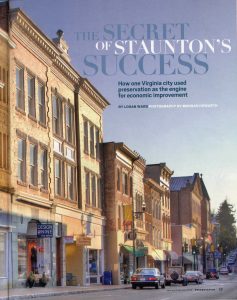
The Secret of Staunton’s Success

Preservation- The Magazine of the National Trust for Historic Preservation

by Logan Ward, Jan-Feb 2012Preservation Jan-Feb 2012 3-1

How one Virginia city used preservation as the engine for economic improvement.

To read the article, click here: Preservation Jan-Feb 2012

The Palladio Awards: Parking Takes a Turn for the Better

Traditional Building, 2002

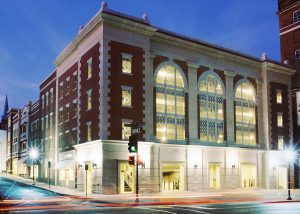
“Recently designated as one of America’s Distinctive Dozen Communities by the National Trust for Historic Preservation, Staunton, Va., web_NSGarage_nightis steeped in tradition. When its citizens decided that they needed a new downtown parking lot, they turned to Frazier Associates, a local architectural firm with a history of revitalizing Main Streets….”.  This project is featured on our website at https://frazierassociates.com/portfolio-item/new-street-grage/

To read the article, click here: Traditional Building: Parking Takes a Turn for the Better


Credits Where Credits Are Due: Bringing Historic Tax Credits to Main Street

Created in 1996, Virginia’s Historic Rehabilitation Tax Credit (HRTC) program is one of the most effective incentives for preservation and revitalization of the state’s vast stock of historic structures. According to a study by Virginia Commonwealth University in 2013, over $3.9 billion has been invested through the Historic Rehabilitation Tax Credit program since 1996 resulting in the rehab of over 2,375 historic buildings throughout Virginia. The projects stimulated the economy in general, creating an estimated 31,000 jobs and generating $133 million in local and state tax revenue. State tax credits amount to 25 percent of total rehabilitation costs. When combined with the 20 percent Federal tax credit, this incentive makes many projects more financially feasible for property owners throughout Virginia. https://preservationvirginia.org/press-room/release/vcu-study-finds-historic-preservation-contributes-to-virginias-economy-by-u

Frazier Associates has been assisting property owners with design and application for historic tax credit projects since the program’s inception.  The firm has witnessed the benefits of this valuable tool for historic preservation of both commercial and residential properties in communities large and small across the Commonwealth. Examples of some of these projects can be found on our website at https://frazierassociates.com/services/architecture/historic-rehabilitation-historic-tax-credits/

Learn More about the Tax Credits

Kathy Frazier recently presented a webinar to the Virginia Main Street community, “Credits Where Credits Are Due: Bringing Historic Tax Credits to Main Street” which explained how use of the tax credits can not only enhance the appearance of Main Street but can encourage further economic development in Virginia’s downtowns.  Key points of the presentation included:2016 Tax Credit Webinar 1

  • How credits can be used to attract and incentivize downtown investment
  • How to navigate the state and federal historic tax credit process
  • A breakdown of the design guidelines of the Secretary of the Interior’s Standards for Rehabilitation
  • Highlights of successful downtown tax credit projects in Virginia Main Street communities.

To see the webinar, click here:  2016 Tax Credit Webinar

Historic Rehabilitation Tax Credit Under Review

The AIA Virginia is a strong supporter of Virginia’s Historic Rehabilitation Tax Credit, noting “not only does the HRTC have a proven track record for stimulating economic growth through private investment, it helps to preserve Virginia’s cultural heritage for future generations”. This important incentive is currently under review by the Virginia General Assembly’s Joint Subcommittee to Evaluate Tax Preferences. The AIA, along with a coalition of twelve other organizations, are working to educate legislators on the benefits of the program in an effort to keep the credits in place. To find out more about this effort go to: https://www.aiava.org/advocacy_news/historic-rehabilitation-tax-credit-threatened/

Contact Frazier Associates for more information about the state and federal historic rehabilitation tax credits, and to see if your building might qualify.